
What is a ‘Safe’ Country?
When considering a move to another country, safety is one of the top concerns for Expats. However, asking “Is Spain safe?” involves more than just crime rates. Safety includes many factors that impact daily life and overall security, including access to healthcare, the risk of natural disasters, political stability, and social acceptance.
Spain has a reputation as one of Europe’s safest destinations for Expats, tourists, and locals. Considering all factors — from its low violent crime rates and world-class healthcare system to its stable government and welcoming communities — Spain generally offers a secure environment for foreign residents.
We wanted to know if Spain really is safe, so we analyzed publicly available statistics and trends. We examined key safety aspects to consider when evaluating Spain as your potential new home. In particular, we compared how safe Spain is compared to the US and the UK. And our conclusion?…
Spain is Safer than the US and the UK
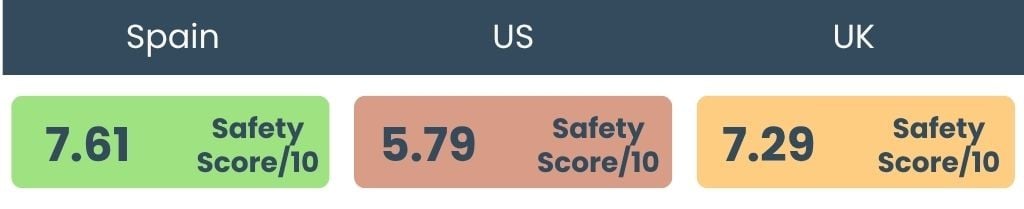
Our analysis assesses Spain as a significantly safer country to live in than the US. Interestingly, while Spain scores better than the UK, the difference is marginal.
This is how the countries ranked across the different safety parameters, with each score out of 10 (the higher the score, the safer). You can view each parameter in detail in the sections below, along with links to the data used.
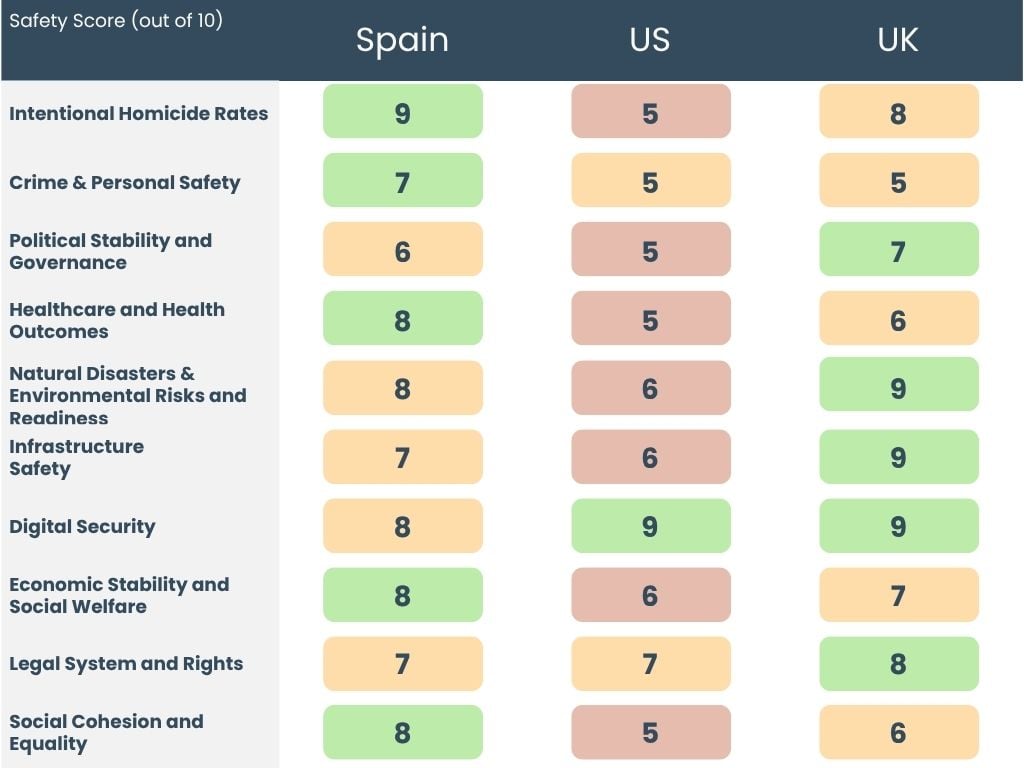
Note: Scores for each country, categorized by area, have been weighted in accordance with the significance attributed to each area. The weightings are determined by the perspectives of our clients and other Expats residing in Spain.
1 >> Intentional Homicide Rate
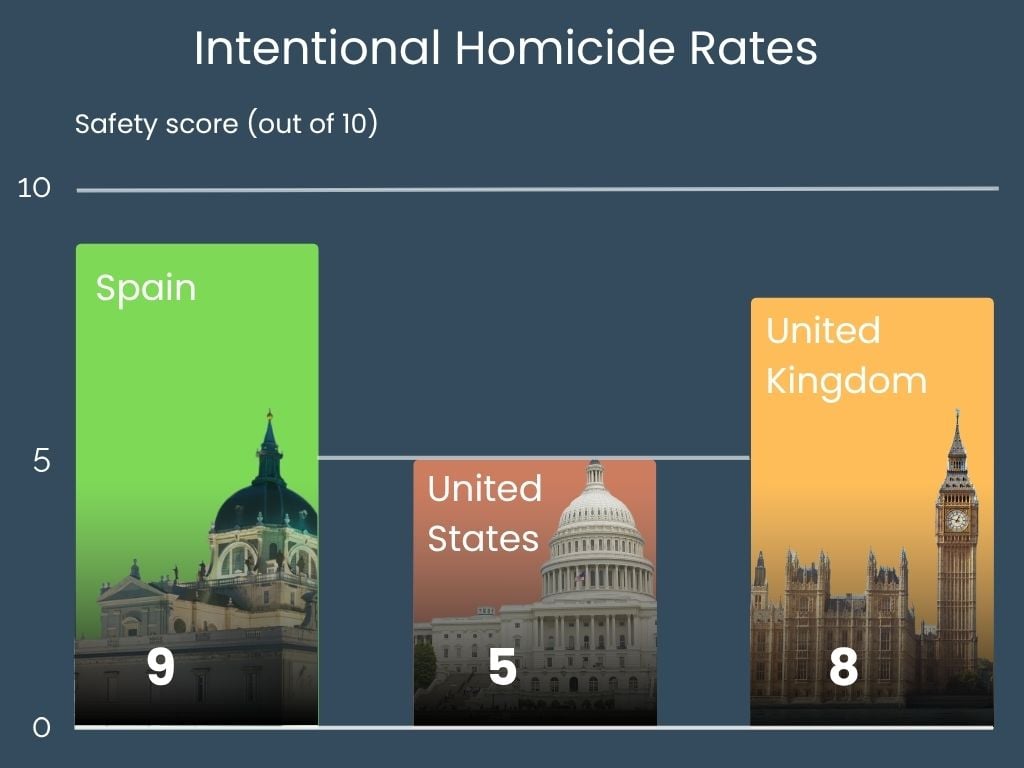
Spain stands out as one of the safest countries in Europe, with its performance in crime and security measures offering compelling evidence. The country’s low violent crime rates and effective governance contribute to its reputation as a secure destination for Expats.
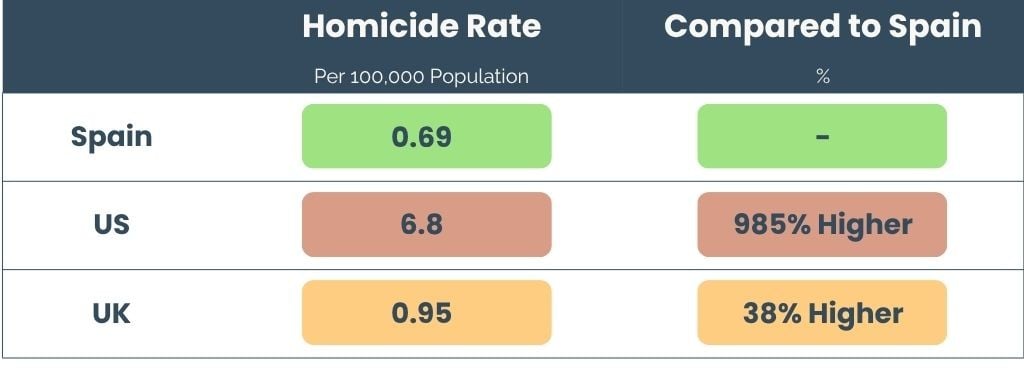
Spain has lower violent crime rates than many European countries and the US. According to the 2024 Global Peace Index, Spain ranks 29th out of 163 countries globally. The homicide rate is approximately 0.69 per 100,000 inhabitants, significantly lower than the EU average (1.0) and far below the US rate of 6.8. The UK rate is 0.95.
Source: CDC Homicide ONS Homicide World Population Review
The Expat View
Marisa Lopez moved to Spain 19 years ago and lives in Sitges (Catalonia) with her husband and two daughters. She says, “I’m grateful that our daughters are growing up in a tolerant society as citizens of the world. Gun violence is virtually non-existent.”
2 >> Crime and Personal Safety
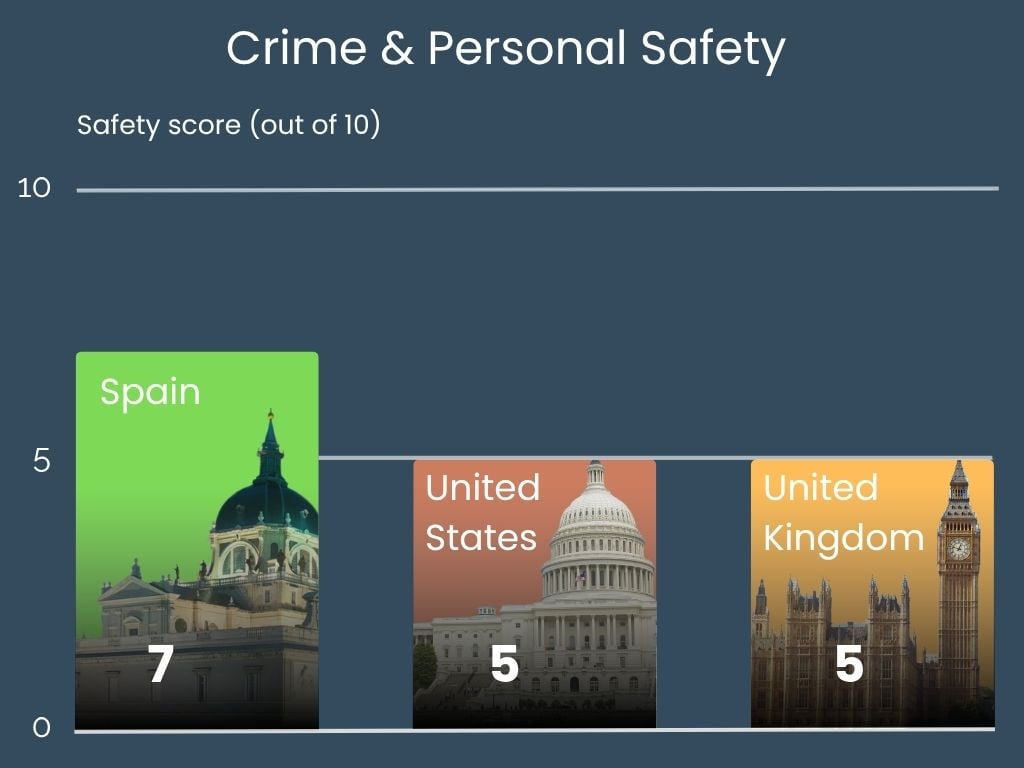
Similarly, property crime in Spain has seen a substantial decline over the past decade. Spain ranks 14th globally for this metric, with reported theft and burglary incidents decreasing significantly in urban hubs such as Madrid and Barcelona.
The 2023 Safe Cities Index ranked Madrid 15th and Barcelona 21st among global cities in terms of personal security. Women generally report feeling safe, even when walking alone at night in most areas. LGBTQ+ safety is high, with Spain being one of the most progressive countries in Europe regarding LGBTQ+ rights and acceptance.
Regional variations exist, with the Costa del Sol experiencing a 12% increase in property-related crimes since 2022, attributed to the increased recovery of tourism. The Balearic Islands experience seasonal fluctuations in crime, with a 28% increase during peak tourist months.
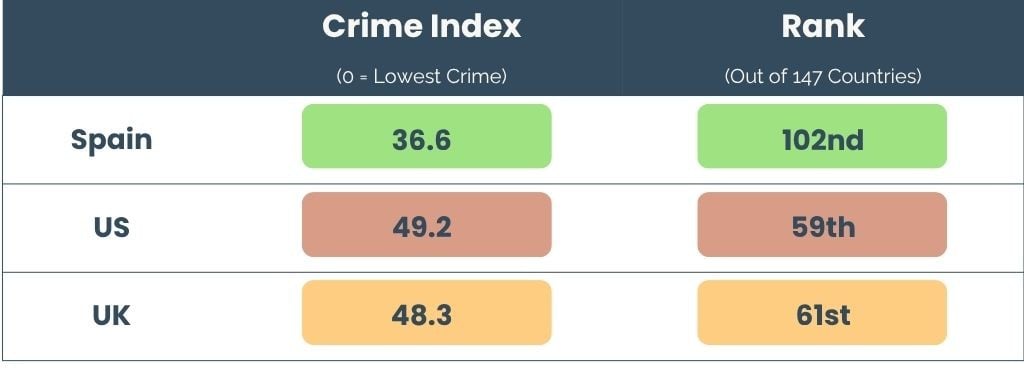
Source: Numbeo
The Expat View
The majority view among our Expats is that they generally feel Spain is safe, especially when compared to their native countries. However, there is a growing sense that petty crime, particularly in cities, has increased over recent years. This feeling is almost universal – we feel the same way! Petty crime is one of those areas where published statistics and lived experience don’t seem to align.
An American client of Moving to Spain who has lived in Madrid since 2023 comments: “I frequently see families with children on the streets fairly late at night, and generally feel completely safe walking around at any time of day. I know a couple of people who have been pickpocketed, but compared to the US, at least big cities, it is definitely much safer here, and the violent crime is essentially nonexistent.”
Nelleke arrived in Las Palmas, Gran Canaria, from the Netherlands seven years ago. She founded and runs Live It Up, Las Palmas!, a digital nomad and remote work community. She says: “Las Palmas de Gran Canaria is a very safe city. However, there has been an increase in petty crime recently in specific areas, where you have to exercise more caution later in the day.”
Originally from Australia, Leigh moved to Barcelona in 2011. After having been mugged, she strikes a pragmatic approach: “I live in Eixample, which feels stable and safe. It’s not the Gothic Quarter or Raval, where petty theft is more common, especially around tourist hotspots.”
Real answers for your move, for your specific situation
The Spain Decide Package gives you an immigration lawyer, a cross-border tax specialist, and healthcare quotes built around your household. Your relocation coach pulls it together and maps what comes next, so you know if the move works before you commit.
3 >> Political Stability and Governance
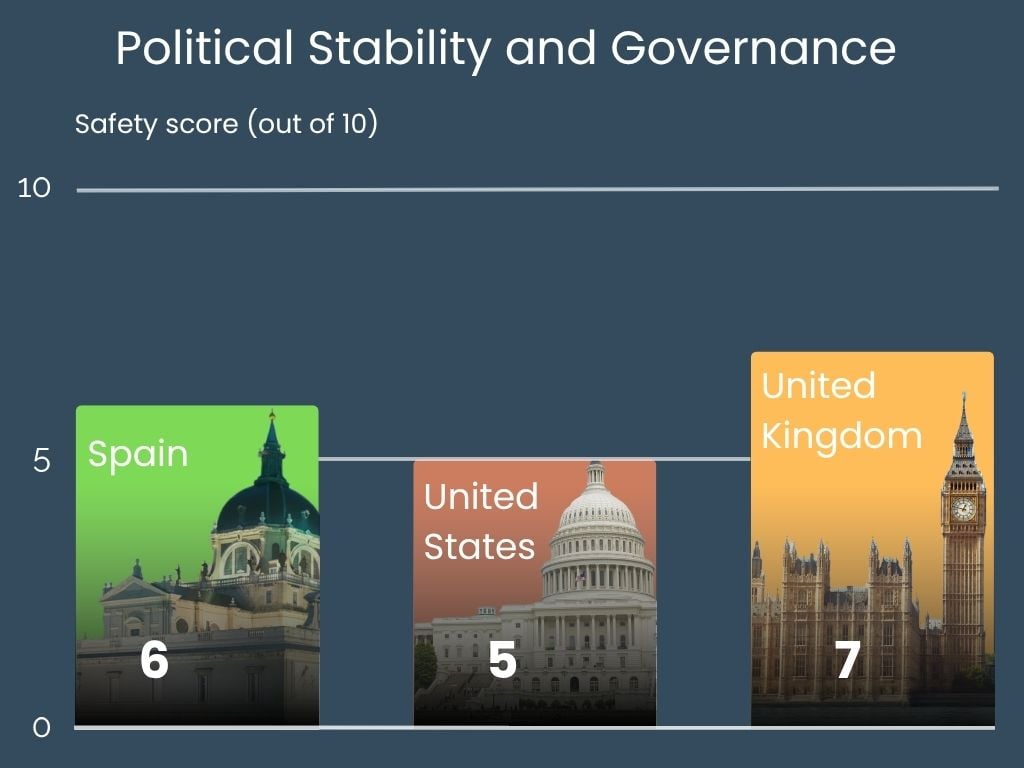
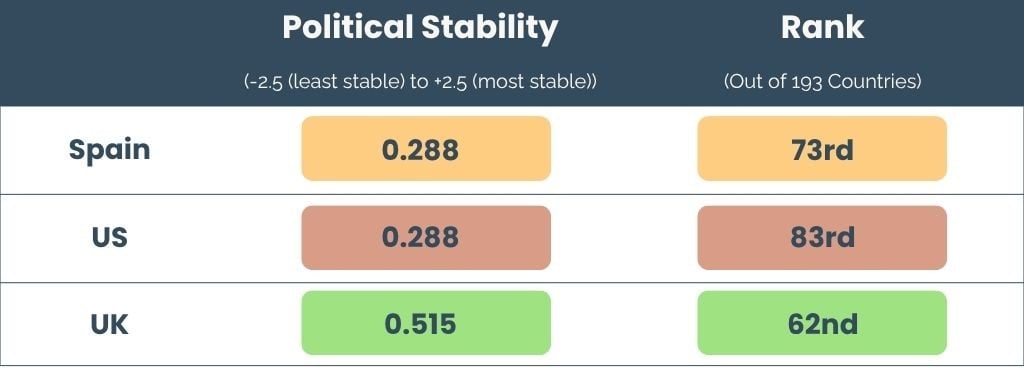
Spain has maintained a stable constitutional monarchy with a democratic parliamentary system since transitioning to democracy in 1977. It has a well-established democratic framework, ensuring checks and balances between the executive, legislative, and judicial branches.
Over the past five years, Spain’s federal government—formally a unitary parliamentary system—has experienced political instability marked by repeated general elections and the need for coalition governments. Since 2019, no single party has secured a clear majority in the national parliament, resulting in coalition arrangements, most notably between the Spanish Socialist Workers’ Party (PSOE) and Unidas Podemos, later joined by smaller regional parties. This has led to a more negotiated form of governance at the national level, with policymaking often dependent on consensus-building among diverse political blocs.
The 2023 Political Stability Index ranked Spain 25th globally, down slightly from 23rd in 2021, reflecting increased political fragmentation, as coalition governments have become the norm.
Catalonian independence tensions have decreased significantly since 2020, with separatist parties losing ground in recent regional elections. Terrorism concerns have reduced considerably since ETA (the Basque separatist group) declared a permanent ceasefire in 2011.
Spain ranks 20th globally in terms of political accountability, reflecting its commitment to transparency and citizen participation in governance. Over the past decade, this metric has shown significant improvement.
Government effectiveness also plays a significant role in Spain’s safety profile. Ranked 26th globally, Spain’s ability to utilize EU funds effectively for infrastructure development and economic growth underscores its capacity to manage complex projects successfully.
Institutional trust in Spain has gradually improved, particularly in confidence in local police forces and the judiciary. However, trust in politicians remains low, ranking 129th globally. This indicates lingering concerns about political integrity.
Spain’s regulatory quality ranks 35th globally, highlighting its efforts to create a predictable business environment while reducing bureaucratic burdens. These measures contribute to economic stability, which is closely tied to political stability.
Source: World Bank
The Expat View
Sean, a life coach from New Zealand, and his British wife, Claire, a freelance translator, arrived in Málaga from Switzerland in 2020. Claire has previously lived in Barcelona. “We find Spain as politically stable as any European country. Like most of Europe, there has been a growth in support for the far right, but there is also a degree of pragmatism in their politics.”
Leigh echoes concern about a political shift to the right. “Vox’s hateful rhetoric, anti-immigrant stance, and regressive social agenda don’t belong in a pluralistic democracy. I really hope Spain resists the tide. The country, at its best, is inclusive, neighbourly, and community-minded. That’s worth protecting.”
4 >> Healthcare and Health Outcomes
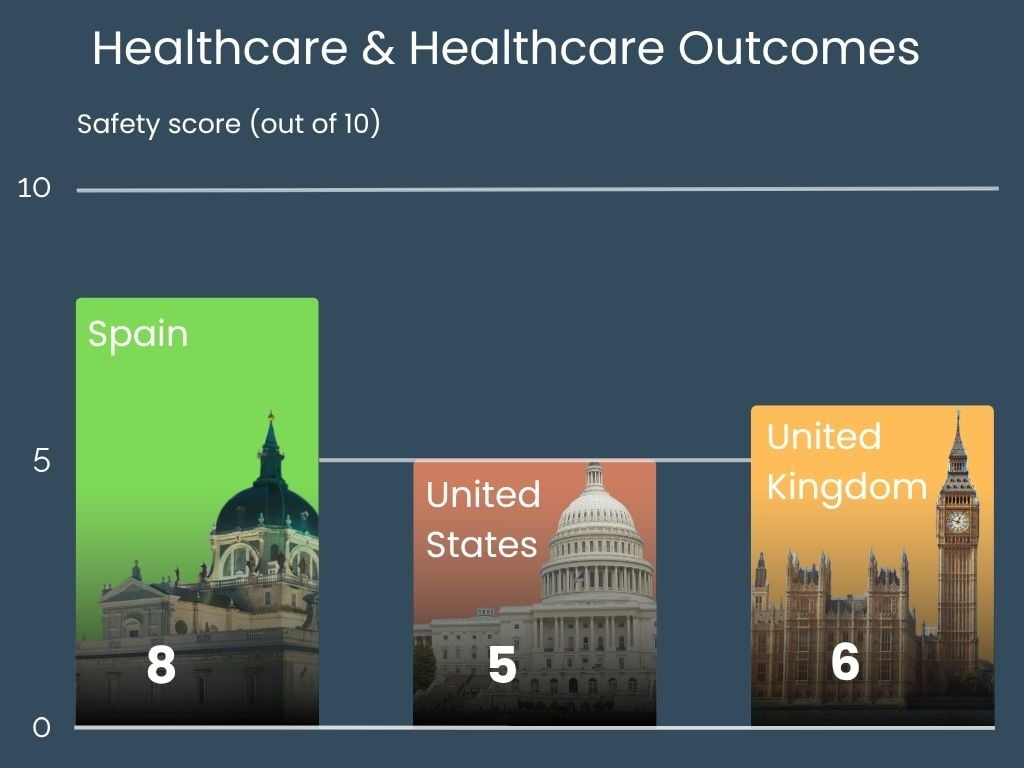
Spain’s healthcare system stands out as one of the country’s most reassuring features for Expats, consistently ranking among the world’s best for quality and outcomes.
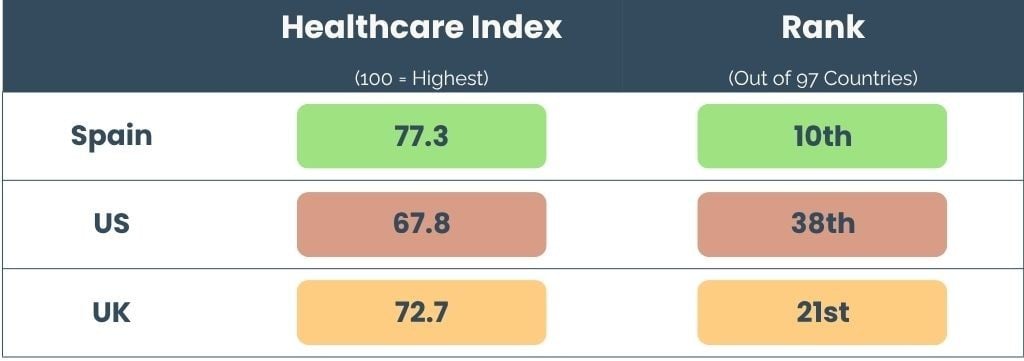
The 2025 Numbeo Health Care Index by Country ranked Spain’s healthcare system 10th globally. Life expectancy stands at 83.3 years (2023), the highest in the EU and among the highest globally. Infant mortality rates are low, and survival rates are high for major diseases.
The backbone of Spain’s health achievements is its universal public healthcare system, the Sistema Nacional de Salud (SNS). This system is tax-funded, provides virtually universal coverage (99.7%), and is free at the point of care for all residents. The SNS is decentralized, with regional governments managing healthcare provision to meet local needs..
Emergency response times nationwide average 11.3 minutes, with urban areas averaging 8.7 minutes. Hospital capacity increased by 12% since 2021 due to pandemic preparedness improvements, and public health emergency response protocols were overhauled in 2023. Hospital bed availability is 3.0 per 1,000 inhabitants (2023), with regional variations (highest in Catalonia at 3.7, lowest in Andalucía at 2.5).
Preventive care is a cornerstone of the Spanish approach, characterized by high vaccination rates and effective public health campaigns that target issues such as smoking and diet. While Spain’s smoking rate remains above the EU average and adolescent obesity is a growing concern, the country outperforms much of Europe in deaths attributed to unhealthy diets and has a lower rate of heavy drinking.
But there are challenges. Dental care must be paid for and dental costs are higher than the EU average, although exemptions protect most households from incurring catastrophic costs. There are also regional disparities in access to certain services, and a shortage of primary care doctors in some rural areas remains a concern.
Source: Numbeo
The Expat View
Is Spain safe from a healthcare standpoint? The opinions of our Expats are unanimous: Spain’s healthcare system is extremely well-run, delivering a high-quality service. In many cases, it is deemed superior to their native countries.
Originally from the UK, Verity has over 25 years’ experience living in Spain. She is a live illustrator and visual storyteller and lives in Las Palmas in Gran Canaria. “Public healthcare is top-level, I’ve never had an issue with it.”
Sean and Claire go further: “Our experience with the healthcare system has been very positive. We have used both public and private healthcare systems, and both have been very effective. There may be slightly longer waiting times for the public system, but in general, getting appointments with doctors and specialists is very easy and quick, with a very good level of professional and friendly service.”
Everyone agrees that when it comes to public healthcare in Spain, learning some Spanish goes a long way. Leigh adds that while this is true for general care, therapy is a different story: “Because therapy is rooted in self-expression, accessing it in your native language is essential. That’s the foundation of my work—providing English-speaking support for internationals.”
Underlining the point, she adds: “There’s no denying that the healthcare system here is exceptional, but when it comes to mental health, language matters.”
5 >> Natural Disasters and Environmental Risks and Readiness
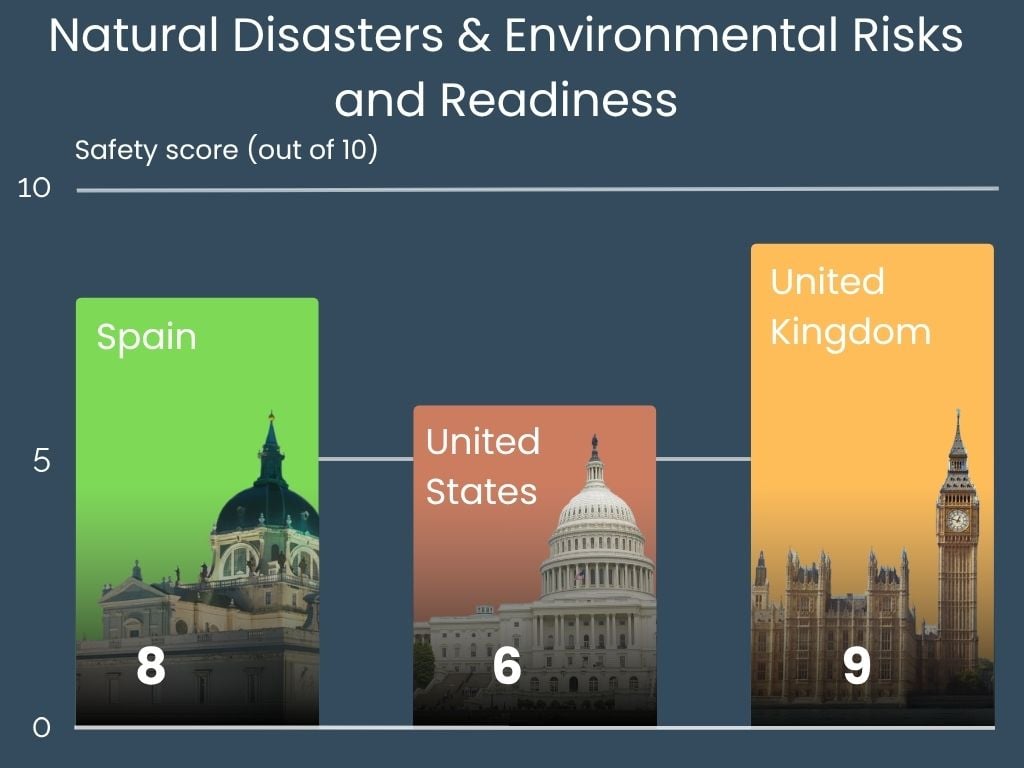
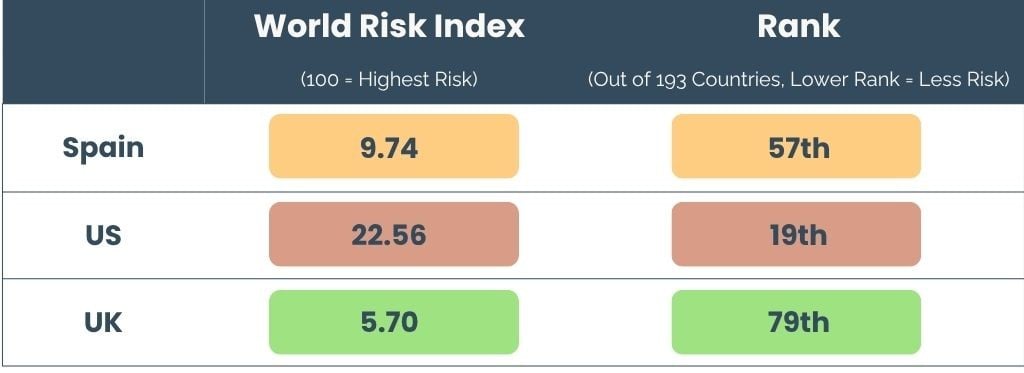
Spain’s natural disaster and environmental risk profile is shaped by its diverse geography, climate, and evolving readiness and adaptation systems.
Spain has a relatively low risk of severe natural disasters compared to many countries. The country experienced 42 earthquakes with a magnitude above 3.0 in 2023, primarily located in the southern and southeastern regions. The largest recent earthquake, a magnitude 4.5 event, in Granada in 2022 caused minor damage.
Forest fires burned 84,000 hectares in 2023, a 23% increase from 2022 but below the ten-year average. Heat-related deaths increased by 15% during the 2023 summer heat waves, as temperatures reached record highs in several regions.
While Spain is classified as having a moderate level of disaster risk overall, certain regions, particularly the Mediterranean coast, including Valencia and Murcia, are notably more vulnerable to natural hazards, especially floods and droughts.
Floods
Floods are Spain’s most frequent and damaging natural disasters, with recent years seeing an increasing severity. The catastrophic DANA (isolated high-altitude depression) storm in autumn 2024 stands as the most devastating natural disaster in Spain’s recorded history, resulting in at least 158 fatalities and massive disruption to infrastructure and essential services in Valencia and surrounding areas.
Droughts
By contrast, southern and southeastern Spain, in particular, are experiencing declining rainfall and more frequent water shortages, with some cities implementing water restrictions and relying increasingly on desalination and aquifer pumping.
Drought conditions affected 37% of the country in 2023, compared to 28% in 2022, with water restrictions implemented in parts of Andalucía and Murcia. €3.4 billion has been allocated for climate adaptation infrastructure, including coastal erosion protection initiatives launched in 2023 for vulnerable Mediterranean shorelines.
The European Environment Agency warns that, as Europe’s fastest-warming country, Spain will face worsening heatwaves, wildfires, and coastal flooding in the coming decades unless decisive adaptation measures are taken.
Readiness and Response
Spain’s disaster readiness and response systems have improved significantly over the past thirty years, with the development of enhanced early warning systems, increased public awareness, and strengthened emergency planning and intervention capacity.
However, the 2024 floods exposed significant weaknesses in Spain’s disaster management framework. While beneficial for local adaptation, the country’s decentralized governance structure led to fragmented communication and coordination between national, regional, and local authorities, resulting in delays in issuing warnings and mobilizing resources.
Source: World Risk Report
The Expat View
When we speak to Expats about natural distaers in Spain it ranks really low on their radar. Most agree that Spain’s risk of severe natural disasters is low. The 2024 floods in Valencia have raised the profile of the issue, and there is a noticeable increase in awareness in drought-affected areas. Climate change is pretty clear in many parts of Spain.
Sean and Claire think that: “The processes and systems are there to manage natural disasters effectively, but there seems to be a nonchalance from the people themselves. In Málaga, people seemed a little bit blasé about weather red alerts, for example. However, the tragedy in Valencia changed all that, and when we had a subsequent red alert for rain and potential flooding, people took it very seriously.”
6 >> Infrastructure Safety

Spain’s infrastructure safety underpins its reputation as a modern, secure, and comfortable country for Expats. The CMS 2023 Infrastructure Index ranks Spain 17th out of 50 countries in its Infrastructure Environment category.
Over the last decade, Spain has invested heavily in developing and maintaining robust infrastructure, resulting in reliable public services and a high standard of living for residents.
Transport
Transport infrastructure is one of Spain’s greatest strengths. The country ranks 8th worldwide for the quality of its transport systems, which include extensive high-speed rail networks, modern airports, and well-maintained highways.
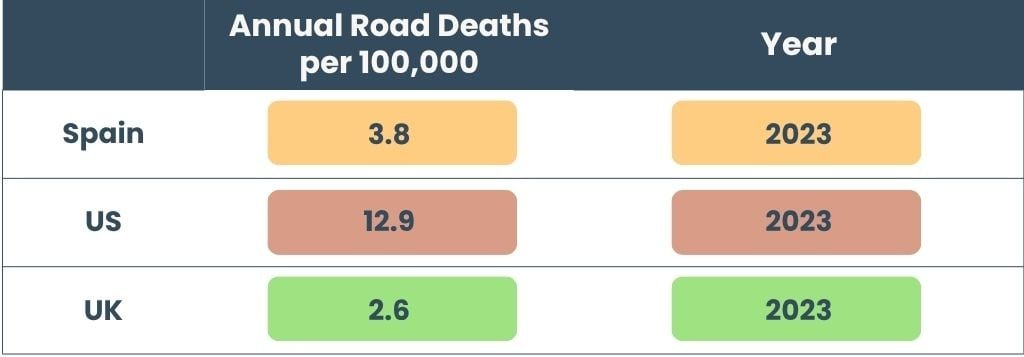
Road fatalities were 3.8 per 100,000 inhabitants in 2023. This compares to 12.9 in the US and 2.6 in the UK (2022 data). Public transportation safety incidents decreased by 8% in 2023 compared to 2022.
Spain’s AVE high-speed trains connect major cities efficiently and safely, while regional and urban public transport options are affordable and dependable. The 3,622 km high-speed rail network is the largest in Europe, and the country’s airports consistently meet international safety standards.
Building
The Spanish Building Code (Código Técnico de la Edificación, or CTE) mandates structural integrity, fire safety, energy efficiency, noise protection, and health standards. These regulations are updated to reflect technological advances and EU directives.
Spain’s infrastructure planning and investment are guided by robust feasibility studies and a growing emphasis on inter-modality and mobility, aiming to integrate transport systems and maximize value for money. The 2022 infrastructure quality assessment ranked Spain 14th globally, up from 18th in 2021.
While infrastructure governance is complex due to overlapping national, regional, and local responsibilities, recent reforms have improved coordination and sped up permitting processes, making Spain’s infrastructure safe and adaptable to future needs.
Utilities
Utilities and essential services in Spain are reliable. Water, electricity, and telecommunications infrastructure meet or exceed Western European standards, and recent reforms have streamlined the process for connecting new developments to these networks. Urban water quality compliance reached 99.3% in 2023, up from 98.7% in 2022.
The national power blackout (apagón) on April 28, 2025, was unprecedented in its scale and severity. Previous power outages have tended to affect cities or regions (Barcelona (2004) and Catalonia (2007)).
Source: CMS

The Expat View
“I genuinely value that I live in a beautiful, clean city,” says Leigh. “Yes, there’s the odd dog poo, some graffiti, but that’s the flair of a living, breathing city, isn’t it? And the public transport? Brilliant. People from all walks of life use buses, trams, and trains.”
Matt, originally from the US, owns and operates his exclusive real estate agency, Anderson West, in Mallorca, whose model is backed by 30 years of real estate industry “know-how”. Matt’s Mallorquín side of the family has been practicing in the sector (building, selling, and legal aspects) since before many major agencies arrived on Mallorca’s shores. Regarding infrastructure, he says: “We have an obligation, of course, to conserve water and not to be wasteful, which is a good rule of thumb for wherever you are.”
7 >> Digital Security
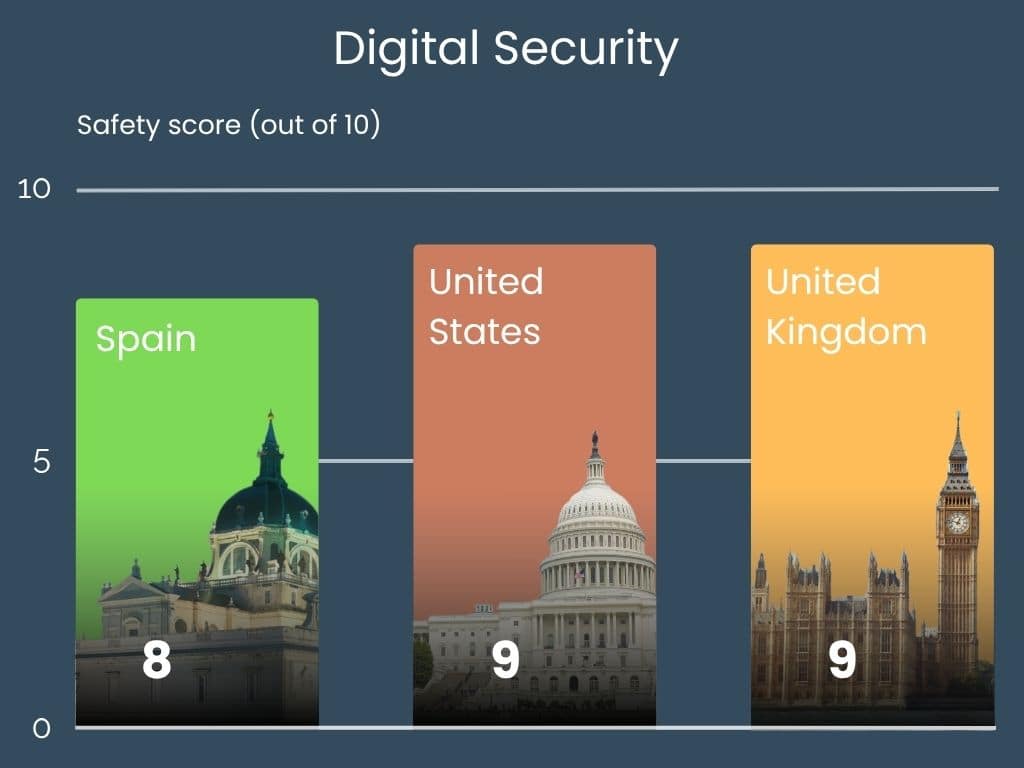
Robust regulatory frameworks, rapid technological advancements, and a culture of high digital adoption define Spain’s digital security landscape in 2025. Digital infrastructure is strong, with broadband coverage reaching 95.8% of households as of early 2024, up from 91.2% in 2022. 5G coverage is currently around 90% of the population, up from 71% at the end of 2022. The Global Cybercrime Report 2024 ranked Spain 19th out of 70 countries (although its score of 85 is close to the top score of 93).
Cybersecurity incidents affecting critical infrastructure increased by 28% in 2023, prompting the launch of a new national security initiative. In early 2025, the government approved a draft Cybersecurity Coordination and Governance law, aiming to transpose the EU’s NIS2 Directive into national law. This legislation will apply to both public and private entities, particularly those operating in critical sectors such as energy, transportation, finance, healthcare, digital infrastructure, and public administration.
The creation of a National Cybersecurity Centre will further centralize oversight, coordinate crisis response, and act as the main point of contact with EU authorities.
Regulatory compliance remains a cornerstone of Spain’s digital security strategy. The country adheres to the EU’s General Data Protection Regulation (GDPR), and new laws have introduced stringent data collection and retention requirements for businesses, especially in the tourism sector.
Overall, Spain measures up well in digital security, blending advanced technology, comprehensive regulation, and a culture of compliance.
Source: MIxmode

Expat View
Views are mixed on this subject. Leigh observes: “Digital security is another quirk — Spanish government websites often don’t have security certificates, which can be unnerving. But functionally, things work.”
While Sean and Claire’s experience is: “In general, digital security through our Internet provider Orange seems pretty good. We have had no intrusions into our home network and no incidents of nefarious online activity. Both banks where we have accounts have substantial cybersecurity processes and safeguards.
The only thing we would say is that the level of spam cold calling in Spain seems high, much more than in other countries where we have lived.”
8 >> Economic Stability and Social Welfare
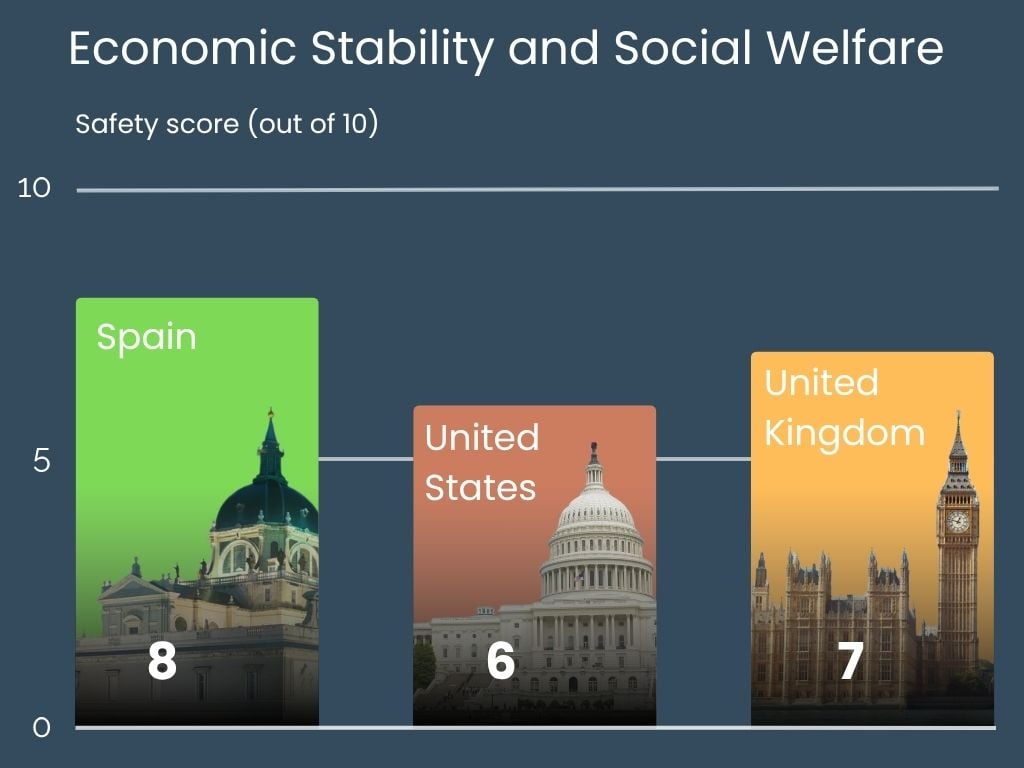
The Spanish economy has recovered well from the 2008 financial crisis. Economic growth has outperformed much of the Euro area, with GDP growing 3.2% in 2024, four times the Eurozone average of 0.8%. The Economist noted Spain had the ‘best-performing rich economy in 2024’.
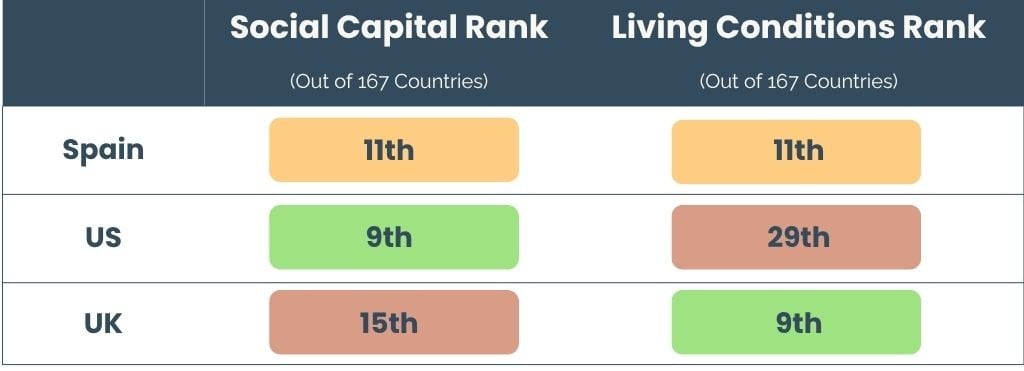
According to the 2023 Legatum Prosperity Index, Spain ranks 24th globally for overall prosperity out of 167 countries, with particular strengths in living conditions (11th) and social capital (11th).
However, persistent challenges temper this positive outlook. Spain’s public debt is high at over 113% of GDP, and the fiscal deficit remains sizeable, raising questions about long-term sustainability, especially as pension and healthcare costs are projected to rise with an aging population.
Welfare System
Spain’s comprehensive social welfare system offers universal healthcare, generous sick leave, maternity and paternity leave, and a robust pension system. Social spending is a priority, with a large share of the budget allocated to pensions and unemployment benefits.
The banking system is stable and well-regulated, with Spanish banks maintaining capital ratios averaging 14.2% (2023), above regulatory requirements. Spain’s credit rating improved to “A” from three major rating agencies in 2023-24.
Cost of Living
The cost of living remains relatively low compared to northern Europe, which, combined with the quality of public services, makes Spain particularly attractive for retirees and families seeking security and comfort.
The cost of living varies significantly by region, with Madrid and Barcelona being the most expensive cities, while many smaller towns and rural areas offer very affordable living options.
Employment
The labor market has also shown resilience, with employment surpassing pre-pandemic levels and the unemployment rate falling to 11.4% (May 2025) — the lowest in 15 years, though still above the EU average. Youth unemployment remains high at 27.3% (as of early 2024), although it has improved from 30.5% in 2022.
Many new jobs are low-skilled and temporary, often in the tourism sector. Wages are among the lowest in Western Europe, making it difficult for working-age Expats to achieve the same income as in other European countries.
READ ALSO >>> Working Remotely in Spain for a US Company: Your Complete Guide 2025
Housing
Housing affordability is a growing concern, particularly in major cities, as demand from international buyers and remote workers drives up prices. The property market has stabilized after previous volatility, with property prices increasing by 4.8% nationally in 2023. Madrid (+6.2%) and Valencia (+5.7%) showed the strongest growth.
Rental costs increased by 8.3% nationally in 2023, creating affordability challenges in major cities. Mortgage interest rates averaged 3.6% in early 2024, up from 2.1% in 2022, which negatively impacted affordability.
Despite these hurdles, Spain’s economic outlook is cautiously optimistic. The government’s Recovery and Resilience Plan, supported by substantial EU funding, is driving reforms in labor markets, education, and digitalization, with the aim of boosting productivity and long-term growth.
Source: Legatum
Expat View
Sean and Claire observe: “Public services and amenities are run very well. However, there are growing challenges in balancing economic growth (via tourism and high-end immigration) with skyrocketing living costs, particularly housing. Action is being taken to address this, but possibly more needs to be done.”
9 >> Legal System and Rights
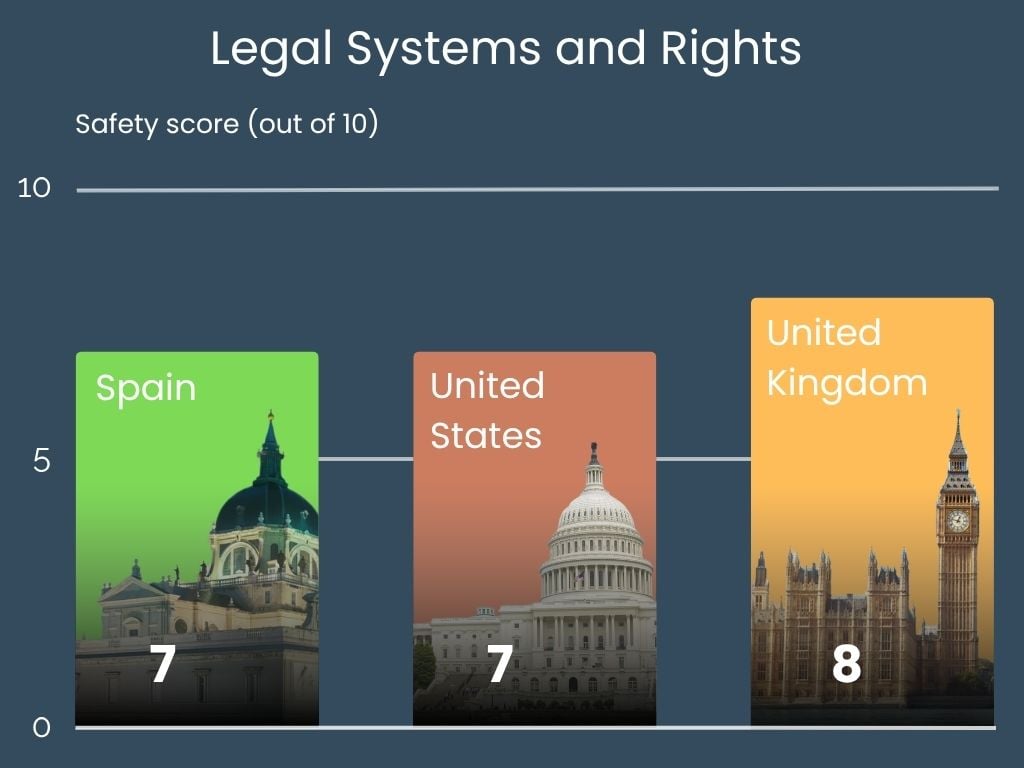
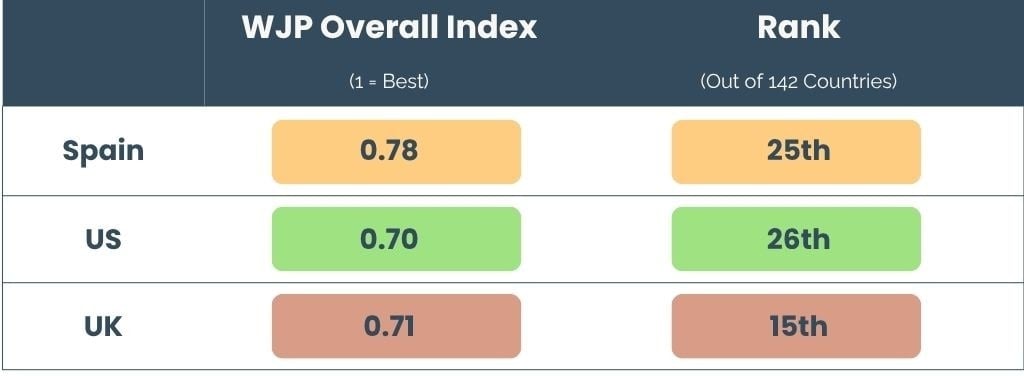
Spain’s rule of law is robust by international standards, ranking 25th out of 142 countries in the 2024 World Justice Project Rule of Law Index. Judicial independence scored 7.1/10 in the 2023 EU Justice Scoreboard, above the EU average. The legal system is independent. The average civil case resolution time decreased to 8.7 months in 2023, improving from 11.2 months in 2021, but remains above the EU average.
The country performs well in areas such as open government and fundamental rights, although there has been a slight decline in recent years, mirroring global trends. Notably, Spain has made progress in anti-corruption efforts, and the 2023 Corruption Perceptions Index ranked Spain 34th out of 180 countries. However, the country still faces challenges in areas such as limitations on government powers and protections for fundamental rights.
The country’s legal protections extend to non-citizens entitled to social security benefits and public services on the same terms as Spanish nationals, provided they are legal residents. Also, foreign property owners have the same property rights as Spanish citizens.
Legal reforms in 2023 simplified residency procedures for non-EU citizens, reducing processing times by 40%. According to consular data, Expat legal complaints decreased by 9% in 2023 compared to 2022.
Overall, Spain’s legal framework offers a high level of security and fairness to everyone in the country.
Source: World Justice Report
10 >> Social Cohesion and Equality
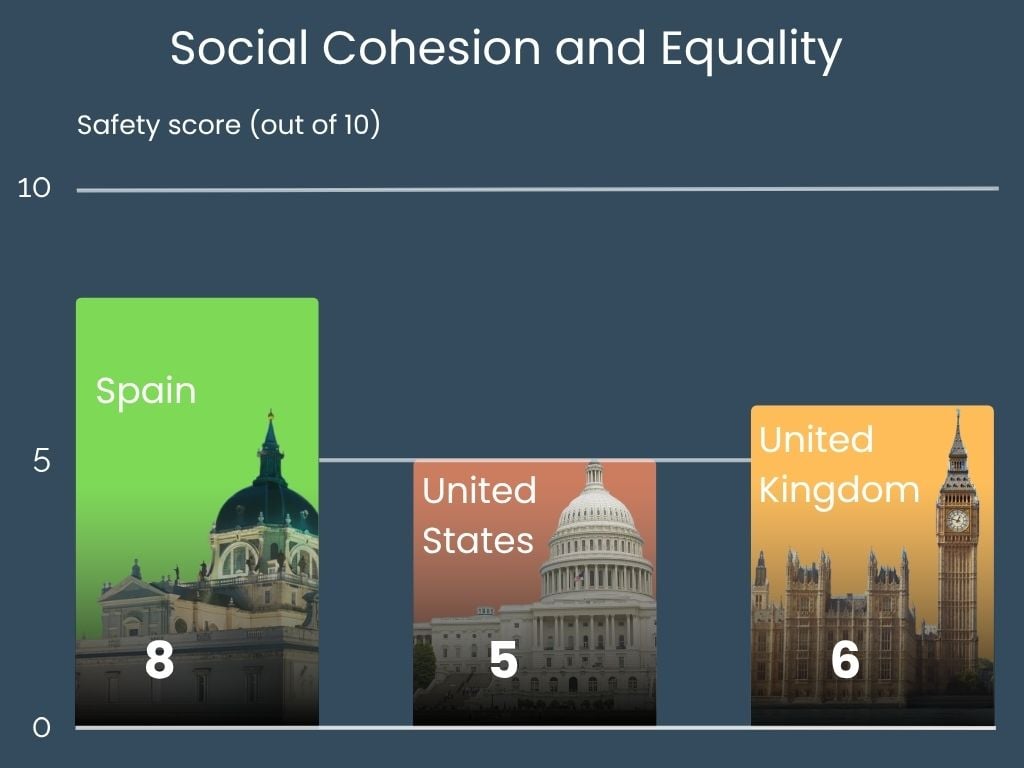
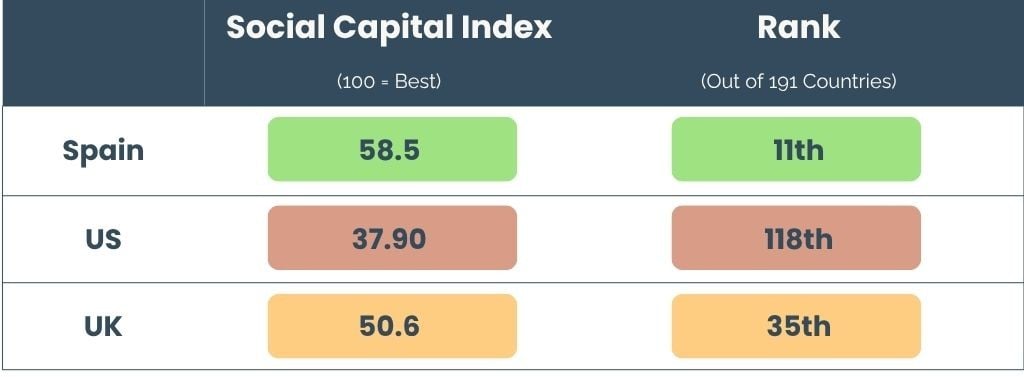
Spanish society is generally welcoming to foreigners. The Global Sustainable Competitiveness Index 2024 ranks Spain 11th out of 191 countries in its ‘Social Capital’ category. In a 2023 InterNations survey, 76% of surveyed Expats reported feeling welcome in Spain, compared to a global average of 67%. According to data from the Interior Ministry, hate crimes decreased by 6.3% in 2023.
Spain’s approach to social cohesion and equality is shaped by progressive legislation, a strong tradition of community life, and ongoing efforts to address challenges around integration, discrimination, and inclusion. The country is recognized for its vibrant social fabric, where family ties, neighborhood networks, and a culture of mutual aid play a central role in daily life. These grassroots efforts are complemented by national policies promoting social inclusion.
Expats
Established Expat communities in Spain have diversified and become well-established in major cities such as Valencia, Malaga, and Alicante. The foreign resident population increased to 5.5 million in early 2024, representing 11.4% of the total population. British Expat numbers stabilized in 2023 after post-Brexit declines, with a 3.2% increase.
Language barriers can exist, as English proficiency varies. Spain has risen to 35th in the 2023 EF English Proficiency Index, up from 38th in 2022, although it remains in the “moderate proficiency” band. Approximately 47% of Spaniards report speaking English at some level in 2023, up from 44% in 2022.
LGBTQ
Spain’s legal and policy framework is among the most advanced in Europe in terms of protecting LGBTQ rights and promoting gender equality. The country was one of the first in the world to legalize same-sex marriage and adoption, and anti-discrimination laws protect individuals across employment, housing, and public services.
Gender Equality
Gender equality has seen significant progress: Spain ranks fourth in the EU Gender Equality Index, with robust legal requirements for balanced political representation and comprehensive workplace equality plans. However, challenges continue, including a persistent gender pay gap. The government’s current strategic plan for gender equality, backed by substantial funding, aims to address these gaps and further mainstream equality across all sectors.
Cultural Diversity
Ethnic and cultural diversity in Spain has increased significantly, particularly due to high levels of immigration from Latin America, North Africa, and Eastern Europe.
Recent immigration regulation reforms have streamlined visa processes, expanded rights for job seekers and students, and created pathways for long-term residence and family reunification. These measures are designed to address labor shortages and an aging population, and foster social inclusion and cohesion. Nevertheless, some barriers remain, such as language obstacles and administrative hurdles to healthcare access for irregular migrants.
While Spain’s policies are broadly inclusive, public attitudes toward immigration are mixed, with a majority expressing concerns about the scale of migration. Incidents of racism and social exclusion still occur, and certain minority groups may face challenges in full integration.
Overall, Spain offers a socially cohesive and increasingly inclusive society, supported by robust legal protections and a dynamic culture of community engagement. While challenges remain, the country’s trajectory is toward greater equality and integration.
Source: The Global Sustainable Competitiveness Index
Expat View
Our experts are in full agreement on this subject. Nevena, who is from Bosnia and Herzegovina and, with her husband, has been running Studio Heisenberg in Ibiza since 2023, comments: “The local community has always felt welcoming and cohesive.”
Leigh, originally from Australia, adds: “Barcelona feels socially cohesive. My local community is polite, even warm, if you make an effort in Spanish or Catalan. People say ‘hello’ in lifts, hold the door, chat in the queue.”
“There was no looting or chaos during the recent 2025 apagón (national power cut), which says a lot; no traffic accidents, no crime waves, just… people getting on with it.”
Verity’s view as a British Expat in Spain is that if you are “sensitive to the local environment, and actively get involved with locals, and show you care about being part of the community, you’ll be more welcome. And learn the language! I can’t emphasize that enough,” she concludes.
Spain Is Safe
When it comes to the question ‘is Spain safe’, the data shows that it stands out as one of Europe’s safest and most welcoming countries for visitors and long-term residents. The combination of low violent crime rates, political stability, and excellent healthcare infrastructure creates an environment where personal safety concerns are remarkably low compared to many other destinations.
While no country is without challenges, Spain’s concerns are generally manageable and localized. Strong legal protections, well-developed infrastructure, and improving economic stability further contribute to its appeal as a safe haven.
Our Expat contributors have painted a considered picture of their lived experiences in Spain. They report that, of course, petty crime exists, but the level and severity of crime are much less than in their native countries. They refer to the problems in the housing sector and the societal problems they cause. However, the overall view is that if you respect the people and culture and immerse yourself in your community, Expats can feel comfortable with personal safety in Spain.
Perhaps what makes Spain truly special is the balance it strikes between safety and quality of life. The country’s generally welcoming attitude toward foreigners, established Expat communities, and rich cultural heritage create an environment where newcomers can not only feel secure but also develop a genuine sense of belonging. While language barriers may present initial challenges, particularly outside tourist centers, they often dissolve with time and effort.
For those considering Spain as a destination for travel, retirement, or relocation, the country offers a rare combination of security, stability, and joie de vivre that continues to attract people from around the world. Whether strolling through Barcelona’s vibrant streets, enjoying retirement on the Costa del Sol, or building a new life in Madrid, Spain provides the essential foundation of safety upon which a fulfilling lifestyle can be built.
Methodology
Each section includes a comparison of how safe Spain is against the US and the UK. We analyzed publicly available data and indices across the safety parameters that make up a country’s ‘safeness’. Then we applied weightings of importance to each parameter. The weightings are calculated on data from our US and UK clients.
This data gives us our assessment of how safe each country is, in the context of what US and UK folk looking to move to Spain consider safe. It is an attempt to quantify the relative performance of Spain across the safety parameters compared to the US and the UK.
Expat Comments
Personal views on what defines a ‘safe’ country play a huge role in determining whether someone considers a country ‘safe’ or not. Age, health, world view, openness to change, and many other factors shape an individual’s assessment. Different people assign varying levels of importance and weight to each factor.
To gather their views, we spoke with Expats living in Spain. They come from diverse countries and backgrounds, have lived in Spain for periods ranging from one year to over 25 years, and reside in various areas of the country, from major cities to the islands. Their unique stories and opinions bring the data and facts that form the backbone of this article to life.
While some conclusions may be anticipated, you might find others unexpected. However, the aim is to provide you with a comprehensive evaluation to address the question: ‘Is Spain safe?’







Really great report!! Thank you.
Thank you, Catherine!
We have more reports of this type in the pipeline, be sure to check back
All the best, Mike
That’s informative and an interesting read. Thanks.
Thank you, Villan! I am so glad you liked it
All the best, Mike
u really think Warcelona is safe??? lol
Yes, we think Barcelona is safe. We’ve lived here for 10 years and our experience, the conversations we’ve had, and (most importantly), the official statistics all say the same thing – for a city of its size, Barcelona is overwhelming safe. All the best, Alastair
Very comprehensive report Team Moving to Spain. Thank you for including my reflections!
Hello. Regarding cultural diversity, My husband and I are African American. We are healthy seniors as well. Is there any resource that sheds light on how our racial group is treated by various cities in Spain? I’m thinking this won’t be the case. I have seen anecdotal stuff on YT, but there’s so much variability there.
Anyway, if there’s anything your team can share, it would be appreciated. We’ve spent time in Barcelona, where we saw a cafe that had a statue of the former president himself! That was a nice sign.
I’ve spent some time in Mallorca as well, and felt comfortable enough. My radar tends to stay up, so I am sensitive to negative bias. Thanks!
HI Cecile. We have a wonderful article we commissioned a journalist to write for the website. It covers the views of many Americans living in Spain and includes the viewpoints of several minorities https://movingtospain.com/living-in-spain-as-an-american-expat/. I hope you find it useful. https://movingtospain.com/living-in-spain-as-an-american-expat/ The bottom line is that for most people, Spain is a very welcoming and judgement free zone, especially in comparison to the experience in other countries. All the best, Alastair